

PlayStation 2
 | |
|---|---|
 Top: The PlayStation 2 logo. Left: Original design PlayStation 2 with vertical stand.Right: Slimline PlayStation 2 with vertical stand, 8 MB memory card and DualShock 2 controller. | |
| Developer | Sony |
| Manufacturer | Sony Computer Entertainment |
| Product family | PlayStation |
| Type | Video game console |
| Generation | Sixth generation |
| Retail availability | |
| Units sold | ~154.4 million, all models combined(as of November 21, 2011)[1][2] |
| Media | DVD, CD |
| CPU | 64-bit[3][4] "Emotion Engine" clocked at 294.912 MHz (launch), 299 MHz (newer models) |
| Storage capacity |
|
| Memory | 32 MB of Direct RAMBUS orRDRAM 4 MB eDRAM |
| Graphics | "Graphics Synthesizer" clocked at 147.456 MHz |
| Controller input | DualShock 2 |
| Connectivity | 100 Mbit Ethernet/modem (requires adapter on SCPH-10000-50000 models), 2 × USB 1.1, 1 × IEEE 1394 interface |
| Online services | Dynamic Network Authentication System |
| Best-selling game | Grand Theft Auto: San Andreas: 17.33 million sold (as of February 2009)[5] |
| Backward compatibility | PlayStation |
| Predecessor | PlayStation |
| Successor | PlayStation 3 |
The PlayStation 2 (プレイステーションUSA, Pureisutēshon USA?, officially abbreviated PS2) is a sixth-generation video game consolemanufactured by Sony as part of the PlayStation series. Its development was announced in March 1999 and it was first released on March 4, 2000, in Japan. Its primary competitors were Sega Dreamcast, Microsoft Xbox, and GameCube.
The PlayStation 2 is the best-selling console of all time, having reached over 150 million units sold as of January 31, 2011.[6][7] This milestone was reached 10 years and 11 months after the system was released in Japan on March 4, 2000. Further, Sony said it had 10,828 titles available for the system and that 1.52 billion PS2 titles had been sold since launch.[8] In late 2009, with developers creating new games and the console still selling steadily a decade after its original release, Sony stated that the life cycle of the PlayStation 2 will continue until demand ceases.[9] The console was succeeded by the PlayStation 3 in 2006.
Contents[hide] |
[edit]History
The PlayStation 2 was announced in 1999 and while it would not be released until 2000, the announcement was enough to slow the momentum for the Sega Dreamcast's North American launch, despite the Dreamcast having a head start over that generation.[10][11]Directly after its release, it was difficult to find PS2 units on retailer shelves[12] due to manufacturing delays.[13] Another option was purchasing the console online through auction websites such as eBay, where people paid over one thousand dollars for a PS2.[14] The PS2 initially sold well partly on the basis of the strength of the PlayStation brand and the console's backward compatibility, selling over 980,000 units in Japan by March 5, 2000, one day after launch.[15] This allowed the PS2 to tap the large install base established by the PlayStation — another major selling point over the competition. Later, Sony added new development kits for game developers and more PS2 units for consumers.
Although Sega announced the discontinuation of the Dreamcast in March 2001, the PS2 would face competition from newer rivals;Microsoft's Xbox and the Nintendo GameCube. Many analysts predicted a close three-way matchup between the three consoles; the Xbox having the most powerful hardware, while the GameCube was least expensive console and Nintendo changed its policy to encouraging third-party developers, and while PlayStation 2 theoretically had the weakest specs it had a head start due to its installed base plus strong developer commitment.[16] While the PlayStation 2's initial games lineup was considered mediocre, this changed during the 2001 holiday season with the release of several blockbuster games that maintained the PS2's sales momentum and held off its newer rivals. Sony also countered the Xbox by temporarily securing PlayStation 2 exclusives for highly anticipated games such as the Grand Theft Auto series andMetal Gear Solid 2: Sons of Liberty.[17]
Sony, unlike Sega with its Dreamcast, originally placed little emphasis on online gaming during its first few years, although that changed upon the launch of the online-capable Xbox. Coinciding with the release of Xbox Live, Sony released the PlayStation Network Adapter in late 2002, with several online first–party titles released alongside it, such as SOCOM: U.S. Navy SEALs to demonstrate its active support for Internet play.[citation needed] Sony also advertised heavily, and its online model had the support of Electronic Arts (EA); EA did not offer online Xbox titles until 2004. Although Sony and Nintendo both started out late, and although both followed a decentralized model of online gaming where the responsibility is up to the developer to provide the servers, Sony's moves made online gaming a major selling point of the PS2.
In September 2004, in time for the launch of Grand Theft Auto: San Andreas, Sony revealed a new, slimmer PS2 (see Hardware revisions). In preparation for the launch of the new models (SCPH-70000-90000), Sony stopped making the older models (SCPH-30000-50000) to let the distribution channel empty its stock of the units.[citation needed] After an apparent manufacturing issue—Sony reportedly underestimated demand—caused some initial slowdown in producing the new unit caused in part by shortages between the time the old units were cleared out and the new units were ready. The issue was compounded in Britain when a Russian oil tanker became stuck in theSuez Canal, blocking a ship from China carrying PS2s bound for the UK. During one week in November, British sales totalled 6,000 units — compared to 70,000 units a few weeks prior.[18] There were shortages in more than 1700 stores in North America on the day before Christmas.[19]
The original life span for the console was set at 10 years, but according to Sony, its lifecycle will continue as long as developers continue to make new games for the system, and as long as the console and its games continue to sell.[9]
[edit]Hardware and software
PlayStation 2 software is distributed on CD-ROM (blue/purple polycarbonate) and DVD-ROM (clear polycarbonate with six "PlayStation" logos). In addition the console can play audio CDs and DVD movies, and is backward compatible with PlayStation games. The PS2 also supports PlayStation memory cards and controllers, although the memory cards only work with PS1 games and the controllers may not support all functions (such as analog buttons) for PS2 games.

The PS2's DualShock 2 controller is essentially an upgraded PlayStation DualShock; analog face, shoulder and D-pad buttons replaced the digitalbuttons of the original.[20] Like its predecessor, the DualShock 2 controller has force feedback, which is commonly called the "vibration" function.

The standard PlayStation 2 memory card has an 8 MB capacity and uses Sony's MagicGate encryption. This requirement prevented the production of memory cards by third parties who did not purchase a license for the MagicGate encryption. Memory cards without encryption can be used to store PlayStation game saves, but PlayStation games would be unable to read from or write to the card – such a card could only be used as a backup. There are a variety of non-Sony manufactured memory cards available for the PlayStation 2, allowing for a larger memory capacity than the standard 8 MB. However their use is unsupported and compatibility is not guaranteed.
The console also features USB and IEEE 1394 expansion ports. Compatibility with USB and IEEE 1394 devices is dependent on the software supporting the device. For example, the PS2 BIOS will not boot anISO image from a USB flash drive or operate a USB printer, as the machine's operating system does not include this functionality. By contrast, Gran Turismo 4 is programmed to save screenshots to a USB mass storage device and print images on certain USB printers. A PlayStation 2 HDD can be installed in an expansion bay on the back of the console, and was required to play certain games, notably the popular Final Fantasy XI.[21] This was only available on certain models (see "Hardware Revisions" below).
[edit]Online
Some games on the PlayStation 2 support online multiplayer gaming through the use of a broadband internet connection and a PlayStation 2 Network Adapter. This is integrated into the hardware on "slimline" models, and can be bought as an add-on for the original "fat" models. Some games also allow online gameplay using a Dial-Up connection (not available on all models), or LAN play by connecting two network adapters (or slimline consoles) together directly with an Ethernet cable or through the same router network.
Instead of having a unified, subscription-based online service like Xbox Live, online multiplayer on the PS2 is the responsibility of the games publisher and is run on third-party servers. Most recent PS2 online games have been developed to exclusively support broadband internet access. Xbox Live similarly requires a broadband internet connection.
All online PS2 games released in and after 2003 are protected by the Dynamic Network Authentication System (DNAS). The purpose of this system is to prevent piracy and online cheating. DNAS will prevent games from being played online if they are determined to be pirated copies or if they have been modified. However, methods have been developed to get around this protection by modifying key files in the modified game.
Over time, many game servers have been shut down; because of this many games can no longer be played online. However, there is a program that allows you to achieve online play for some PS2 games again. This is done by using a network configuration that simulates a world-wide LAN, because of this the game must support LAN play.
In addition to online gaming, some unofficial modifications have been made on the PS2 software allowing it to be used as a fully functional web browser or messenger when connecting to a certain network. This can also be done through PS2 Linux.
[edit]Hardware revisions
The PS2 has undergone many revisions, some only of internal construction and others involving substantial external changes. These are colloquially known among PS2 hardware hackers as V0, V1, V2, ..., V18.[22] Each region receives a different model number; for example, the V18 was released in NA as SCPH-90001, in AU as SCPH-90002, and in HK as SCPH-90006. The final digit is simply a region code and has no bearing on the hardware other than region lock-outs for games and DVDs, and language options within the system software.
The PS2 is primarily differentiated between models featuring the original "fat" case design and "slimline" models, which were introduced at the end of 2004. In 2010, a television incorporating a PS2 was made available to consumers.
[edit]Original case design

Three of the original PS2 launch models (SCPH-10000, SCPH-15000, and SCPH-18000) were only sold in Japan, and lacked the expansion bay of current PS2 models. These models included a PCMCIA slot instead of the expansion bay port of newer models. SCPH-10000 and SCPH-15000 did not have built-in DVD movie playback and instead relied on encrypted playback software that was copied to a memory card from an included CD-ROM. (Normally, the PS2 will only execute encrypted software from its memory card, but see PS2 Independence Exploit.) V3 had a substantially different internal structure from the subsequent revisions, featuring several interconnected printed circuit boards. As of V4 everything was unified into one board, except the power supply. V5 introduced minor internal changes, and the only difference between V6 (sometimes called V5.1) and V5 is the orientation of the Power/Reset switch board connector, which was reversed to prevent the use of no-solder modchips. V7 and V8 included only minor revisions to V6.
The PS2 standard color is matte black. Several different variations in color have been produced in different quantities and regions, including ceramic white, light yellow, metallic blue (aqua), metallic silver, navy (star blue), opaque blue (astral blue), opaque black (midnight black), pearl white, Sakura purple, satin gold, satin silver, snow white, super red, transparent blue (ocean blue), and also Limited Edition color Pink, which was distributed in some regions such as Oceania, and parts of Asia.[23][24][25]
The small PlayStation logo on the front of the disc tray could be rotated ninety degrees, in order for the logo to be the right way up in both vertical and horizontal console orientations. This feature is also used in the slimlines.
[edit]Slimline
 Original style PS2 slimline with a DualShock 2 controller. This was superseded by another slimline design in 2007. | |
| Manufacturer | Sony Computer Entertainment |
|---|---|
| Product family | PlayStation |
| Type | Video game console |
| Generation | Sixth generation era |
| Retail availability | October 2004 – present |
| CPU | 300 MHz |
| Controller input | DualShock 2 |
| Connectivity | 2 × USB 1.1, Ethernet, IrDA, 2 × controller ports. |
In September 2004, Sony unveiled its third major hardware revision (V12, model number SCPH-70000). Available in late October 2004, it is smaller, thinner, and quieter than the older versions and includes a built-in Ethernet port (in some markets it also has an integrated modem). Due to its thinner profile, it does not contain the 3.5" expansion bay and therefore does not support the internal hard disk drive. It also lacks an internal power supply, similar to the GameCube, and has a modified Multitapexpansion. The removal of the expansion bay has been criticized as a limitation due to the existence of titles such as Final Fantasy XI, which require the use of the HDD. The official PS2 Linux also requires an expansion bay to function. Currently only the modified Multitap is sold in stores, however these are also compatible with the older versions, and also added support for multiple memory cards on some games. Third-party connectors can be soldered into the unit giving hard drive support, however IDE connections were completely removed in the V14 revision, thereby eliminating this option. Certain mod chips enable the use of a USB hard drive or other mass storage device.
There are actually two sub-versions of the SCPH-70000.[citation needed] One of them includes the old EE and GS chips, and the other contains the newer unified EE+GS chip, but otherwise they are identical. The variations are variously referred to as V11.5 for the older model (with separate EE and GS chips) and V12 for the newer model, and V12 for the older model and V13 for the newer model.[citation needed] Currently, most people use V12 for both models, or V12 for the old model and V13 for the newer one.[citation needed]
The V12 model was first released in black, but a silver edition is available in the United Kingdom, Germany, Australia, United Arab Emirates and other GCC Countries, France, Italy, South Africa, and most recently, North America. It is unknown whether or not this will follow the color schemes of the older model, although a limited edition console that is pink in color has become available since March 2007.
V12 (or V13) was succeeded by V14 (SCPH-75001 and SCPH-75002), which contains integrated EE and GS chips, and different ASICscompared to previous revisions, with some chips having a copyright date of 2005, compared to 2000 or 2001 for earlier models. It also has a different lens and some compatibility issues with a different number of PlayStation games and even some PS2 games.[26] In the beginning of 2005 it was found that some black slimline console power transformers manufactured between August and December 2004 were defective and could overheat. The units were recalled by Sony, with the company supplying a replacement model made in 2005.[27]
Later hardware revisions had better compatibility with PlayStation games (Metal Gear Solid: VR Missions operates on most silver models); however, the new Japanese slim models have more issues with playing PlayStation games than the first PS2 revisions.[citation needed]
In 2006, Sony released new hardware revisions (V15, model numbers SCPH-77001a and SCPH-77001b). It was first released in Japan on September 15, 2006, including the Silver edition. After its release in Japan, it was then released in North America, Europe and other parts of the world. The new revision uses an integrated, unified EE+GS chip, a redesigned ASIC, a different laser lens, an updated BIOS, and updated drivers.[citation needed]
In July 2007, Sony started shipping a revision of the slimline PlayStation 2 (SCPH-79000) featuring a reduced weight of 600 grams compared to 900 grams of the SCPH-77001 (with Expansion Bay), achieved through a reduction in parts. The unit also uses a smaller motherboard as well as a custom ASIC which houses the Emotion Engine, Graphics Synthesizer, and the RDRAM. The AC adaptor's weight was also reduced to 250 grams from the 350 grams in the previous revision.[28]
Another refinement of the slimline PlayStation 2 (SCPH-90000) was released in Japan on November 22, 2007,[29] As well some cosmetic changes, the design of the hardware has been overhauled, incorporating the power supply into the console itself; this also reduces the total weight to 720 grams (25 oz). SCPH-90000 series consoles manufactured after the third quarter of 2008 (indicated by date code 8C) incorporate a revised BIOS, which disables an exploit present in all older models that allowed homebrew applications to be launched from a memory card.
[edit]PSX

Sony also manufactured a consumer device called the PSX that can be used as a digital video recorder and DVD burner in addition to playing PS2 games. The device was released in Japan on December 13, 2003, and was the first Sony product to include the XrossMediaBar interface. It did not sell well in the Japanese market and was not released anywhere else.
The PSX featured one USB port, a Memory Stick card reader and two Playstation 2 Memory Card slots.[30]
[edit]Sony BRAVIA KDL22PX300
Released in 2010, the Sony BRAVIA KDL22PX300 is a 22 inch 720p television that incorporates a PlayStation 2 console and 4 HDMI ports. The 720p TV also includes BRAVIA Internet Video Access, allowing you access to streaming services like YouTube and on-demand television.[31]
[edit]Sales
 | This article's factual accuracy may be compromised due to out-of-date information. Please help improve the article by updating it. There may be additional information on the talk page. (May 2010) |
| Region | Units sold | First available |
|---|---|---|
| Japan | 21 million (as of October 1, 2008)[32] | March 4, 2000 |
| Asia (including Japan) | 25.42 million (as of March 2007)[33] | March 4, 2000 |
| North America | 50 million (as of December 2008)[34] | October 26, 2000 |
| Europe | 48 million (as of May 6, 2008)[35] | November 24, 2000 |
| Worldwide | 153.19 million (as of March 31, 2011)[33][2] | N/A |
On November 29, 2005, the PlayStation 2 became the fastest game console to reach 100 million units shipped, accomplishing the feat within 5 years and 9 months from its launch. This achievement occurred faster than its predecessor, the PlayStation, which took 9 years and 6 months to reach the same benchmark.[36]
The PS2 has sold over 153 million units worldwide as of March 31, 2011.[7] In Europe, it has sold 48 million units as of May 6, 2008 according to Sony Computer Entertainment Europe,[35] while in North America, it has sold 50 million units as of December 2008.[34] In Japan, the PS2 has sold 21,454,325 units as of October 1, 2008, according to Famitsu/Enterbrain.[32]
In Europe, the PS2 sold 6 million units in 2006 and 3.8 million in 2007, according to estimates by EA.[37][38] In 2007, the PS2 sold 3.97 million units in the US according to the NPD Group[39][40] and 816,419 units in Japan according to Enterbrain.[41] In 2008, the PS2 sold 480,664 units in Japan, according to Enterbrain.[41][42]
[edit]Accessories

The PlayStation 2's DualShock 2 controller is largely identical to the PlayStation's DualShock, with the same basic functionality; however, it includes analog pressure sensitivity on the face, shoulder and D-pad buttons, is lighter and includes two more levels of vibration.

Optional hardware includes DualShock or DualShock 2 controllers, a PS2 DVD remote control, an internal or externalhard disk drive (HDD), a network adapter, horizontal and vertical stands, PlayStation or PS2 memory cards, light guns (GunCon), fishing rod and reel controllers. Also available are various cables and interconnects, including theMultitap for PlayStation or PS2, S-Video, RGB, SCART, VGA (for progressive scan games and PS2 Linux only),component and composite video cables, an RF modulator, a USB camera (EyeToy), dance pads for Dance Dance Revolution, In the Groove, and Pump It Up titles, Konami microphones for use with the Karaoke Revolution games, dual microphones (sold with and used exclusively for SingStar games), various "guitar" controllers (for the Guitar Freaks series and Guitar Hero series), the drum set controller (sold in a box set (or by itself) with a "guitar" controller and a USB microphone (for use with Rock Band and Guitar Hero series(World Tour and newer)), Onimusha 3 katana controller, Resident Evil 4 chainsaw controller, a USB keyboard and mouse, and a headset. Early versions of the PS2 could be networked via an iLink port, though this had little game support and was dropped. The original PS2 multitap cannot be plugged into the newer slim models (as the multitap connects to the memory card slot as well as the controller slot and the memory card slot on the slimline is shallower). New slim-design multitaps are manufactured for these models, however third-party adapters also exist to permit original multitaps to be used. Some third party manufacturers have created devices that allow disabled people to access the PS2 through ordinary switches etc. One such device is the PS2-SAP from LEPMIS, another is for example the JPemulator.
[edit]Mouse Function
Unlike the PlayStation, which required the use of an official Sony PlayStation Mouse to play mouse-compatible games, the few PS2 games with mouse support work with a standard USB mouse as well as a USB Trackball.[43]
USB Mouse compatible games include: Age of Empires II, Armored Core 2, Armored Core 3, ATV Quad Power Racing 2, Deus Ex, Dirge of Cerberus: Final Fantasy VII, EverQuest Online Adventures: Frontiers, Final Fantasy XI, Half-Life,[44] Myst III: Exile, Red Faction 2, Resident Evil 4, Resident Evil: Dead Aim, Sky Odyssey, Soldier of Fortune: Gold Edition, Star Trek Elite Force, Tokyo Xtreme Racer 3, Unreal Tournament.[45]
The official PS2 Linux kit also uses the USB mouse and keyboard.
Additionally, a mouse that emulates the right analog stick of a standard controller, the EdgeFX, was manufactured by SplitFish, allowing non-mouse-compatible games to be played with a mouse.[46][47]
[edit]Home made development
Sony released a Linux-based operating system for the PS2 in a package that also includes a keyboard, mouse, Ethernet adapter and HDD. Currently, Sony's online store states that the Linux kit is no longer for sale in North America. However as of July 2005, the European version was still available. The kit boots by installing a proprietary interface, the run-time environment, which is on a region-coded DVD, so the European and North America kits only work with a PS2 from their respective regions.
In Europe and Australia, the PS2 comes with a free Yabasic interpreter on the bundled demo disc. This allows simple programs to be created for the PS2 by the end-user. This was included in a failed attempt to circumvent a UK tax by defining the console as a "computer" if it contained certain software.[citation needed]
A port of the NetBSD project and BlackRhino GNU/Linux, an alternative Debian-based distribution, are also available for the PS2.
Using homebrew programs (e.g. 'SMS Media Player'[48]) it is possible to listen to various audio file formats (MP3, OMA, Ogg Vorbis, AAC, FLAC, AC3), and watch various video formats (DivX/XviD, MPEG1, MPEG2, MPEG4-ASP in AVI Container) using the console. Media can be played from any device connected to the console i.e. external USB/Firewire thumb drive/hard disk drive (FAT32 only), the internal hard disk on early revision consoles, optical CD-R(W)/DVD±R(W) disks (modded systems or patched disks), or network shares (Windows Network or PS2 host: protocol).
Homebrew programs can be launched directly from a memory card on unmodified consoles by using certain software that takes advantage of a long known and used exploit, dealing with the boot part of the EE/IOP process (Independence).
A more recent development (May 2008) called Free McBoot allows homebrew programs to be launched without a trigger disc required by the older exploit. This also allows use of homebrew on unmodded systems without a functional disc drive. However, installation of the exploit to each individual memory card requires an already exploited/modded system in order to launch the installer. Copying from one memory card to another will not work. This newer exploit will not work on the very newest PS2s (SCPH-9000x model with BIOS 2.30 and up) but will work on all models prior to that.
Homebrew programs can be used to play patched backups of original PS2 DVD games on unmodified consoles, and to install retail discs to an installed hard drive on older models (ESR, HDLoader, USBAdvance).
Homebrew emulators of older computer and gaming systems have been developed for the PS2.[49] Using these homebrew programs the PS2 can emulate the following:
- Atari 2600
- Atari 5200
- BBC Micro
- Commodore 64
- Game Boy
- Mega Drive/Genesis
- Sega Master System
- MSX
- Neo Geo
- Nintendo Entertainment System
- TurboGrafx-16
- Super Nintendo Entertainment System
[edit]Technical specifications
The specifications of the PlayStation 2 console are as follows, with hardware revisions:


- CPU: 64-bit[3][4] "Emotion Engine" clocked at 294.912 MHz (299 MHz on newer versions), 10.5 million transistors
- System memory: 32 MB Direct Rambus or RDRAM
- Memory bus Bandwidth: 3.2 gigabytes per second
- Main processor: MIPS R5900 CPU core, 64-bit, little endian (mipsel).
- Coprocessor: FPU (Floating Point Multiply Accumulator × 1, Floating Point Divider × 1)
- Vector Units: VU0 and VU1 (Floating Point Multiply Accumulator × 9, Floating Point Divider × 1), 32-bit, at 147.456 MHz.
- VU0 typically used for polygon transformations optionally (under parallel or serial connection), physics and other gameplay based things
- VU1 typically used for polygon transformations, lighting and other visual based calculations (Texture matrix able for 2 coordinates (UV/ST)[50])
- Parallel: Results of VU0/FPU sent as another display list via MFIFO (E.G. complex characters/vehicles/etc.)
- Serial: Results of VU0/FPU sent to VU1 (via 3 methods) and can act as an optional geometry pre-processor that does all base work to update the scene every frame (E.G. camera, perspective, boning and laws of movement such as animations or physics) [51]
- Floating Point Performance: 6.2 gigaFLOPS (single precision 32-bit floating point)
- FPU 0.64 gigaFLOPS
- VU0 2.44 gigaFLOPS
- VU1 3.08 gigaFLOPS (with Internal 0.64 gigaFLOPS EFU)
- Tri-Strip Geometric transformation (VU0+VU1): 150 million polygons per second[52]
- 3D CG Geometric transformation with raw 3D perspective operations (VU0+VU1): 66-80+ million polygons per second[50]
- 3D CG Geometric transformations at peak bones/movements/effects (textures)/lights (VU0+VU1, parallel or series): 15–20 million polygons per second[52]
- Actual real-world polygons (per frame):500-650k at 30fps, 250-325k at 60fps
- Compressed Image Decoder: MPEG-2
- I/O Processor interconnection: Remote Procedure Call over a serial link, DMA controller for bulk transfer
- Cache memory: Instruction: 16 KB, Data: 8 KB + 16 KB (ScrP)
- Graphics processing unit: "Graphics Synthesizer" clocked at 147.456 MHz
- Pixel pipelines: 16
- Video output resolution: variable from 256×224 to 1280×1024 pixels
- 4 MB Embedded DRAM video memory bandwidth at 48 gigabytes per second (main system 32 MB can be dedicated into VRAM for off-screen materials)
- Texture buffer bandwidth: 9.6 GB/s
- Frame buffer bandwidth: 38.4 GB/s
- DRAM Bus width: 2560-bit (composed of three independent buses: 1024-bit write, 1024-bit read, 512-bit read/write)
- Pixel configuration: RGB: Alpha:Z Buffer (24:8, 15:1 for RGB, 16, 24, or 32-bit Z buffer)
- Dedicated connection to: Main CPU and VU1
- Overall pixel fillrate: 16×147 = 2.352 Gpixel/s (rounded to 2.4 Gpixel/s)
- Pixel fillrate: with no texture, flat shaded 2.4 (75,000,000 32pixel raster triangles)
- Pixel fillrate: with 1 full texture (Diffuse Map), Gouraud shaded 1.2 (37,750,000 32-bit pixel raster triangles)
- Pixel fillrate: with 2 full textures (Diffuse map + specular or alpha or other), Gouraud shaded 0.6 (18,750,000 32-bit pixel raster triangles)
- GS effects: AAx2 (poly sorting required),[50] Bilinear, Trilinear, Multi-pass, Palletizing (4-bit = 6:1 ratio, 8-bit = 3:1)
- Multi-pass rendering ability
- Audio: "SPU1+SPU2" (SPU1 is actually the CPU clocked at 8 MHz)
- Sound Memory: 2 MB
- Number of voices: 48 hardware channels of ADPCM on SPU2 plus software-mixed channels
- Sampling Frequency: 44.1 kHz or 48 kHz (selectable)
- Output: Dolby Digital 5.1 Surround sound, DTS (Full motion video only), later games achieved analog 5.1 surround during gameplay throughDolby Pro Logic II
- I/O Processor
- I/O Memory: 2 MB
- CPU Core: Original PlayStation CPU (MIPS R3000A clocked at 33.8688 MHz or 37.5 MHz)
- Automatically underclocked to 33.8688 MHz to achieve hardware backwards compatibility with original PlayStation format games.
- Sub Bus: 32-bit
- Connection to: SPU and CD/DVD controller.
- Connectivity:
- 2 proprietary PlayStation controller ports (250 kHz clock for PS1 and 500 kHz for PS2 controllers)
- 2 proprietary Memory Card slots using MagicGate encryption (250 kHz for PS1 cards, up to 2 MHz for PS2 cards)
- 2 USB 1.1 ports with an OHCI-compatible controller
- AV Multi Out (Composite video, S-Video, RGsB (SCART and VGA connector†), YPBPR(component))
- S/PDIF Digital Out
- Expansion Bay for 3.5" HDD (Network Adaptor required, SCPH-10xxx to 5xxxx only)
- Ethernet port (Slim only)
- PCMCIA for PCMCIA Network Adaptor and External Hard Disk Drive (early models only)
- FireWire (SCPH-10xxx to 3xxxx only)
- Infrared remote control port (SCPH-5000x and newer)
^† VGA connector is only available for progressive-scan supporting games and Linux for PlayStation 2 and requires a monitor that supports RGsB, or "sync on green", signals.
- Disc Drive type: proprietary interface through a custom micro-controller + DSP chip. 24x speed CD-ROM, 4x speed DVD-ROM — Region-locked with anti-copy protection. Can't read Gold Discs.
- Supported Disc Media: PlayStation 2 format CD-ROM, PlayStation format CD-ROM, CD-DA, PlayStation 2 format DVD-ROM, DVD Video. DVD5 (Single-layer, 4.7 GB) and DVD9 (Dual-layer, 8.5 GB) supported. Later models starting with SCPH-50000 are DVD+RW and DVD-RW compatible.
[edit]Disc Read Error (DRE) Lawsuit
A class action lawsuit was filed against Sony Computer Entertainment America Inc. on July 16, 2002, in the Superior Court of California, County of San Mateo. The lawsuit addresses consumer reports of inappropriate "no disc error" (disc read error) messages and other problems associated with playing DVDs and CDs on the PlayStation 2.
Sony settled its “disc read error” lawsuit by compensating the affected gamers with USD $25, a free game from a specified list, and the reduced cost repair or replacement (at SCEA’s discretion) of the damaged system. This settlement was subject to the courts’ approval, and hearings began in the US and Canada on April 28, 2006, and May 11, 2006, respectively.[54]
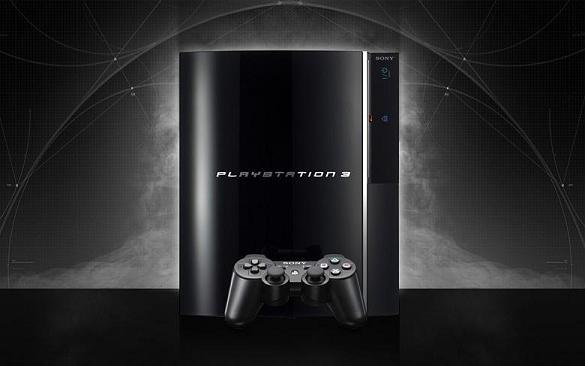
PlayStation 3

  | |
|---|---|
 Counter-clockwise from the top: Original logo, new logo, original "fat" model, DualShock 3 controller, current "slim" model. | |
| Developer | SCEI |
| Manufacturer | Sony EMCS, Foxconn, ASUSTeK[1] |
| Product family | PlayStation |
| Type | Video game console |
| Generation | Seventh generation |
| Retail availability | November 11, 2006 |
| Units sold | 62 million (as of December 31, 2011)[2] |
| Media |
|
| Operating system | XrossMediaBar System software version 4.00 (November 29, 2011)[3] |
| CPU | 3.2 GHz Cell Broadband Enginewith 1 PPE & 7 SPEs |
| Storage capacity | 2.5-inch SATA hard drive (20 GB, 40 GB, 60 GB, 80 GB, 120 GB, 160 GB, 250 GB, or 320 GB included)(upgradeable) |
| Memory | 256 MB system and 256 MB video |
| Display | |
| Graphics | 550 MHz NVIDIA/SCEI RSX 'Reality Synthesizer' |
| Sound | |
| Controller input | Sixaxis, DualShock 3, Logitech Driving Force GT, Logitech Cordless Precision controller, standard USB controllers, GT Force, Rhythm game controllers,PlayStation Move, GunCon 3,PlayStation Portable, Keyboard and Mouse |
| Connectivity | |
| Online services | PlayStation Network |
| Best-selling game | Call of Duty: Black Ops (no sales figures)[5] |
| Backward compatibility | PlayStation (all models) PlayStation 2 (20 GB, 60 GB and some (CECHExx) 80 GB models) |
| Predecessor | PlayStation 2 |
The PlayStation 3 (プレイステーション3 Pureisutēshon Surī, officially abbreviated as PS3.[6]) is the third home video game consoleproduced by Sony Computer Entertainment and the successor to the PlayStation 2 as part of the PlayStation series. The PlayStation 3 competes with Microsoft's Xbox 360 and Nintendo's Wii as part of the seventh generation of video game consoles. It was first released on November 11, 2006, in Japan,[7] with international markets following shortly thereafter.[8][9][10]
Major features of the console include its unified online gaming service, the PlayStation Network,[11] its multimedia capabilities,[12]connectivity with the PlayStation Portable,[13] and its use of the Blu-ray Disc as its primary storage medium.[14]
Contents[hide] |
History
Sony officially unveiled the PlayStation 3 (then marketed as PLAYSTATION 3[15]) to the public on May 16, 2005 at the E3 2005 conference,[16] along with a 'boomerang' shaped prototype design of the Sixaxis controller.[17] A functional version of the system was not present there,[18] nor at the Tokyo Game Show in September 2005,[19] although demonstrations (such as Metal Gear Solid 4: Guns of the Patriots[18]) were held at both events on software development kits and comparable personal computer hardware.[18][19] Video footage based on the predicted PlayStation 3 specifications was also shown (notably a Final Fantasy VII tech demo).[20] The initial prototype shown in May 2005 featured two HDMI ports, three Ethernet ports and six USB ports;[21] however, when the system was shown again a year later at E3 2006, these were reduced to one HDMI port, one Ethernet port and four USB ports, presumably to cut costs.[22][23] Two hardware configurations were also announced for the console: a 20 GB model and a 60 GB model, priced at US$499 (€499) and US$599 (€599), respectively.[22] The 60 GB model was to be the only configuration to feature an HDMI port, Wi-Fi internet, flash card readers and a chrome trim with the logo in silver.[22] Both models were announced for a simultaneous worldwide release: November 11 for Japan and November 17 for North America and Europe.[24]
On September 6, 2006, Sony announced that the PAL region PlayStation 3 launch would be delayed until March 2007, due to a shortage of materials used in the Blu-ray drive.[25] At the Tokyo Game Show on September 22, 2006, Sony announced that it would include an HDMI port on the 20 GB system, but a chrome trim, flash card readers, silver logo and Wi-Fi would not be included.[26] Also, the launch price of the Japanese 20 GB model was reduced by over 20%,[27] and the 60 GB model was announced for an open pricing scheme in Japan.[27] During the event, Sony showed 27 playable PS3 games running on final hardware.[28]
Launch

The PlayStation 3 was first released in Japan on November 11, 2006 at 07:00.[7] According toMedia Create, 81,639 PS3 systems were sold within 24 hours of its introduction in Japan.[29]Soon after its release in Japan, the PS3 was released in North America on November 17, 2006.[8] Reports of violence surrounding the release of the PS3 include a customer shot,[30]campers robbed at gunpoint,[31] customers shot in a drive-by shooting with BB guns,[32] and 60 campers fighting over 10 systems.[33]
The console was originally planned for a global release through November, but the European and rest-of-the-world's release was delayed "until March" at the start of September.[34] With it being a somewhat last-minute delay, some companies had taken deposit-based pre-orders, to which Sony informed customers that they were eligible for full refunds or could continue the pre-order.[35] On January 24, 2007, Sony announced that the PlayStation 3 would go on sale on March 23, 2007 in Europe, Australia, the Middle East, Africa and New Zealand.[9][10] The system sold about 600,000 units in its first two days.[36] On March 7, 2007, the 60 GB PlayStation 3 launched in Singapore with a price of S$799.[37]The console was launched in South Korea on June 16, 2007 in a single version equipped with an 80 GB hard drive and IPTV.[38]
PS3 Slim and console rebranding
Following speculation that a 'slim' model was in the pipeline Sony officially announced the PS3 CECH-2000 model on August 18, 2009 at the Sony Gamescom press conference.[39][40]Among its features are a slimmer form factor and quieter noise when powered on. It was released in major territories by September 2009. As part of the release for the slim model, the logo was changed from the "Spider-Man font" and capitalized PLAYSTATION 3 to a more traditional PlayStation and PlayStation 2 like 'PlayStation 3' logo with "PS3" imprinted on the console. Along with the console and logo redesign, the boot screen of all consoles changed from "Sony Computer Entertainment" to "PS3 PlayStation 3", with a new chime and the game start splashscreen being dropped. The cover art and packaging of games has also been changed to reflect the redesign.[40]
Console configurations
System unit
The PlayStation 3 is convex on its left side, with the PlayStation logo upright, when vertical (the top side is convex when horizontal) and has a glossy black finish. PlayStation designer Teiyu Goto stated that the Spider-Man-font-inspired logo "was one of the first elements SCEI president Ken Kutaragi decided on and the logo may have been the motivating force behind the shape of PS3".[41]
The PlayStation 3 features a slot-loading 2x speed Blu-ray Disc drive for games, Blu-ray movies, DVDs, CDs and other optical media.[42] It was originally available with hard drives of 20 and 60 GB (20 GB model was not available in PAL regions)[43][44] but various sizes up to 320 GB[45][46] have been made available since then (see: model comparison). All PS3 models have user-upgradeable 2.5" SATA hard drives.[47]
The PlayStation 3 uses the Sony, Toshiba, IBM-designed Cell microprocessor as its CPU, which is made up of one 3.2 GHz PowerPC-based "Power Processing Element" (PPE) and eight Synergistic Processing Elements (SPEs).[48] The eighth SPE is disabled to improve chip yields.[49][50] Only six of the seven SPEs are accessible to developers as the seventh SPE is reserved by the console's operating system.[50] Graphics processing is handled by the NVIDIA RSX 'Reality Synthesizer', which can output resolutions from 480i/576i SD up to 1080pHD.[42] The PlayStation 3 has 256 MB of XDR DRAM main memory and 256 MB of GDDR3 video memory for the RSX.[51]
The system has Bluetooth 2.0 (with support for up to 7 bluetooth devices[52]), gigabit Ethernet, USB 2.0 and HDMI 1.4[cn 1] built in on all currently shipping models. Wi-Fi networking is also built-in on all but the 20 GB models, while a flash card reader (compatible with Memory Stick, SD/MMC and CompactFlash/Microdrive media) is built-in on 60 GB and CECHExx 80 GB models.[42][51]
The PS3's hardware has also been used to build supercomputers for high-performance computing.[53] Fixstars Solutions sell a version of Yellow Dog Linux for the PlayStation 3 (originally sold by Terra Soft Solutions).[54] RapidMind produced a stream programming package for the PS3,[55] but were acquired by Intel in 2009. Also, on January 3, 2007, Dr. Frank Mueller,Associate Professor of Computer science at NCSU, clustered 8 PS3s. Mueller commented that the 256 MB of system RAM is a limitation for this particular application and is considering attempting to retrofit more RAM. Software includes: Fedora Core 5 Linux ppc64, MPICH2, OpenMP v 2.5, GNU Compiler Collection and CellSDK 1.1.[56][57][58] As a more cost-effective alternative to conventional supercomputers, the U.S. military has purchased clusters of PS3 units for research purposes.[59] Retail PS3 Slim units cannot be used for supercomputing, because the PS3 Slim lacks the ability to boot into a third-party OS.
On March 22, 2007, SCE and Stanford University released the Folding@home project for the PlayStation 3.[60] This program allows PS3 owners to lend the computing power of their consoles to help study the physical process of protein folding.
In December 2008, a group of hackers used a cluster of 200 PlayStation 3's to hack the security protocol SSL.[61]
Original model

There are several original PlayStation 3 hardware models, which are commonly referred to by the size of their included hard disk drive: 20, 40, 60, 80 or 160 GB.[22][62] Although referred to by their HDD size, the capabilities of the consoles vary by region and release date. The only difference in the appearance of the first five models was the color of the trim, number of USB ports, the presence or absence of a door (which covers the flash card readers on equipped models) and some minor changes to the air vents. All retail packages include one or two Sixaxis controllers and/or a DualShock 3controller (beginning June 12, 2008[63][64]), one miniUSB to USB cable (for connecting the controller and PlayStation Portable to the system), onecomposite video/stereo audio output cable, one Ethernet cable (20, 60 and CECHExx 80 GB only) and one power cable.[62][65][66] All models support software emulation of the original PlayStation,[67][68] but support for PlayStation 2 backward compatibility has continually diminished with later models and the last model to advertise integrated backward compatibility was the 80GB Metal Gear Solid 4 Bundle.[69] Compatibility issues with games for both systems are detailed in a public database hosted by the manufacturer.[70] All models, excluding the 20 GB model, include 802.11 b/g Wi-Fi. In addition to all of the features of the 20 GB model, the 60 GB model has internal IEEE 802.11 b/g Wi-Fi, multiple flash card readers (SD/MultiMedia Card, CompactFlash Type I/Type II, Microdrive,[71] Memory Stick/PRO/Duo) and a chrome colored trim.[72] In terms of hardware, the 80 GB model released inSouth Korea is identical to the 60 GB model released in the PAL regions, except for the difference in hard drive size.[73]
Like the South Korean and European models, the North American 80 GB (2007) model also excludes the PlayStation 2 "Emotion Engine" CPU chip.[69]However, it retains the "Graphics Synthesizer" GPU.[74] Due to the elimination of the "Emotion Engine", the level of compatibility was reduced.[69] The 40 GB, 80 GB (2008) and 160 GB models have two USB ports instead of the four USB ports on other models and do not include multiple flash card readers, SACD support,[75] or any backward compatibility with PlayStation 2 games.[69][76] This was due to the removal of "Graphics Synthesizer" GPU, which stripped the units of all PlayStation 2 based hardware.[77][78]
No official Wi-Fi or flash memory card readers were ever released by Sony for the 20 GB system, although Sony had plans to do so.[79] As of September 2009, Sony have placed no further emphasis on these proposed add-ons.[78] Nevertheless, as the model features four USB 2.0 ports, wireless networking and flash memory card support can already be obtained through the use of widely available external USB adapters and third-party PS3-specific media hubs.[69]
It was rumored that the Cell processors in the third-generation PS3s (40 GB, 2008 80 GB and 160 GB) would move from a 90 nm process to the newer 65 nm process,[80] which SCEI CEO Kaz Hirai later confirmed,[81] and later to 45 nm. This change lowers the power consumption of the console and makes it less expensive to produce.[82]
Slim model

The redesigned, slimmer version of the PlayStation 3 (commonly referred to as the "PS3 Slim" and officially branded "PS3") is currently the only model in production. It features an upgradeable 120 GB, 160 GB,[45][46] 250 GB or 320 GB[45][46] hard drive and is 33% smaller, 36% lighter and consumes 34% (CECH-20xx) or 45% (CECH-21xx) less power than the previous model,[39][83][84] or one third of the original PS3 model. The Cell microprocessor has moved to a 45 nm manufacturing process, which lets it run cooler and quieter than previous models, and the cooling system has been redesigned.[85]The RSX moved to a 40 nm process [86] in the latest revision. The PS3 slim also includes support for CEC (more commonly referred to by its manufacturer brandings of BraviaSync, VIERA Link, EasyLink etc.) which allows control of the console over HDMI by using the TV's remote control. The PS3 Slim no longer has the "main power" switch like the previous PS3 models, similar to redesigned slimline PlayStation 2. Support for emulation to play PS2 titles is not present in the Slim version, however shortly after the release of the PS3 slim, Sony announced a new series of PS2 remasters called Classics HD as in PS2 and PSP titles remastered in HD for the PS3 with trophies added and sometimes PlayStation Move compatibility.[39][83]As of October 2011, PS2 classics are available for purchase in the Playstation Store.[87]
The PS3 slim was officially released on September 1, 2009 in North America and Europe and on September 3, 2009 in Japan, Australia and New Zealand.[39][83][88][89] However, some retailers such as Amazon.com, Best Buy and GameStop started to sell the PS3 slim on August 25, 2009.[90][91]The PS3 Slim sold in excess of a million units in its first 3 weeks on sale.[92] A 250 GB Final Fantasy XIII-themed PS3 Slim, which was white in color with pink designs, was officially announced on September 24, 2009 at the Tokyo Game Show as part of a bundle in Japan for Final Fantasy XIII, it was initially revealed in U.S. Federal Communications Commission (FCC) filings as the PS3 CECH-2000B.[93][94] Sony Computer Entertainment Australia also announced later that day that it would be bringing the 250 GB PS3 slim to Australia which would be bundled with other games and will not feature the Final Fantasy XIII theme. Although no North American bundles have been announced for the 250 GB PS3 slim, it is sold as a stand-alone console in North America.[95]
In July 2010, Sony announced two new sizes of Slim PS3, 160 GB and 320 GB, with the 120 GB model being discontinued in Japan.[46] These were launched on July 29, 2010 in Japan, with the 160 GB version available in "Classic White" as well as the standard "Charcoal Black".[46] The black 160 GB version was also made available as a bundle with the Japan-only DVR accessory torne.[45] It was later announced that the new sizes were to be launched in other regions, with the 160 GB model available from August 2010 in North America[96] and October 2010 in Europe.[97] The 320 GB model is to be available in North America only as part of a bundle with PlayStation Move, a PlayStation Eye and a copy of Sports Champions,[96] and in Europe with PlayStation Move, a PlayStation Eye and a demo disc.[97] The bundles were released on September 19, 2010 and September 15, 2010 respectively, to coincide with the launch of PlayStation Move.[96][97]
Model comparison
| Model | Features | Available Colors | First Available | In production | Available bundles | |
|---|---|---|---|---|---|---|
| 20 GB CECHBxx NTSC[72] | N/A |
| No[98] | N/A | ||
| 60 GB CECHAxx NTSC[72] |
|
| No | |||
| 60 GB CECHCxx PAL[72] |
(MGS4 bundles sold with DualShock 3 controller) |
| ||||
| 80 GB CECHExx NTSC[72] |
| |||||
| 40 GB CECHGxx CECHHxx CECHJxx PAL, NTSC[77] |
| (All with Satin Silver trim) | No[103] | |||
| 80 GB CECHKxx CECHLxx CECHMxx PAL, NTSC[78][103] |
|
(All with Satin Silver trim) |
| No | ||
| 160 GB CECHPxx CECHQxx PAL, NTSC[112][113] |
|
| ||||
| 120 GBslim CECH-20xxA CECH-21xxA PAL, NTSC |
|
|
| |||
| 250 GBslim CECH-20xxB CECH-21xxB PAL,[117]NTSC |
| |||||
| 160 GBslim CECH-25xxA[45] CECH-30xxA[130] PAL,[97]NTSC[46] | Yes | |||||
| 320 GBslim CECH-25xxB[45] CECH-30xxB[137] PAL,[97]NTSC[46] |
| |||||
All Piano Black and Ceramic White models have a glossy finish[143]
All models include: Blu-ray/DVD/CD drive, HDMI 1.3a,[144] Bluetooth 2.0, Gigabit Ethernet (10BASE-T, 100BASE-TX, 1000BASE-T) and PlayStation backward compatibility through software emulation.[67][68]
Model numbers differ by region. See PlayStation 3 hardware – model numbers for details.
^ a Linux support removed in firmware version 3.21. See Removal of "OtherOS" support for details
^ b Ceramic white model available in Asia and Japan only.
^ c Satin silver model available in Asia and Japan only.
^ d Gun-Metal Gray model is only available as part of the MGS4 bundle.
^ e Yakuza 3 bundle features a Ceramic White model with custom grey dragon designs on its case. This version had a limited run of 10,000 units.[108][145]
^ f "Cloud Black" (dark grey) console is only available as part of a Japanese limited edition Final Fantasy VII: Advent Children bundle and features a custom white design on the console[114]
^ g White and Pink model is only available as part of the Japanese Final Fantasy XIII bundle and features a pink design of Final Fantasy XIII character "Lightning" on its case.
Controllers and accessories

Numerous accessories for the console have been developed. These accessories include the wireless Sixaxis and DualShock 3 controllers, theLogitech Driving Force GT, the Logitech Cordless Precision Controller, the BD Remote, the PlayStation Eye camera, and the PlayTV DVB-Ttuner/digital video recorder accessory.[146][147]
At Sony's 2006 E3 press conference, the (then) standard wireless Sixaxis controller was announced. The controller was based on the same basic design as the PlayStation 2's DualShock 2 controller but was wireless, lacked vibration capabilities, had a built-in accelerometer (that could detect motion in three directional and three rotational axes; six in total, hence the name Sixaxis) and had a few cosmetic tweaks.
At its press conference at the 2007 Tokyo Game Show, Sony announced the DualShock 3 (trademarked DUALSHOCK 3), a PlayStation 3 controller with the same function and design as the Sixaxis, but with vibration capability included.[148] Hands-on accounts describe the controller as being noticeably heavier than the standard Sixaxis controller and capable of vibration forces comparable to the DualShock 2.[149] It was released in Japan on November 11, 2007;[150] in North America on April 5, 2008;[151] in Australia on April 24, 2008; in New Zealand on May 9, 2008; in mainland Europe on July 2, 2008[152] and in the United Kingdom and Ireland on July 4, 2008.
During E3 2009, Sony unveiled plans to release a motion controller later to be named PlayStation Move at GDC 2010. It was released on September 15, 2010 in Europe; September 19, 2010 in North America and October 21, 2010 in Japan.[153]
On October 13, 2010, Sony announced an official surround sound system for the PS3 through the official PlayStation YouTube channel.[154]
Reliability

A 2009 study by SquareTrade, a warranty provider, found a two-year failure rate of 10% for PlayStation 3s.[155] According to Ars Technica, the number of PlayStation 3 consoles that have experienced failure is well within the normal failure rates in the consumer electronics industry.[156]
Yellow light of death
In September 2009, the BBC television programme Watchdog aired a report investigating the "yellow light of death" (YLOD) issue, a yellow light that indicates a non-specific hardware failure which renders the system unusable. According to the report the failure was likely to occur after 18–24 months, while the standard Sony warranty is one year in duration, after which PlayStation 3 owners can pay Sony a set fee for a refurbished console.[157]
Sony claimed that, according to its statistics of returned consoles approximately only 0.5% of consoles were reported as showing the YLOD.[157] In response to the program Sony issued a document criticizing the program's accuracy and conclusions; specifically that the faults were evidence of a manufacturing defect. The document also complained that the report had been inappropriate in tone, and might do damage to Sony's brand.[158][159]
Leap year bug
On March 1, 2010 (UTC), many of the original (non-Slim) PlayStation 3 models worldwide were experiencing errors related to their internal system clock. The error had a multitude of symptoms. Initially, the main problem seemed to be the inability to connect to the PlayStation Network. However, the root cause of the problem was unrelated to the PlayStation Network, since even users who had never been online also had problems playing installed offline games (which queried the system timer as part of startup) and using system themes. At the same time many users noted that the console's clock had gone back to December 31, 1999. The event was nicknamed the ApocalyPS3, a play on the word apocalypse.[160]
The error code displayed was typically 8001050F and affected users were unable to sign in, play games, use dynamic themes and view/sync trophies.[161] The problem only resided within the 1st through to the 3rd generation original PS3 units while the newer "Slim" models were unaffected due to different internal hardware for the clock.
Sony confirmed that there was an error and stated that they were narrowing down the issue and were continuing to work to restore service.[162] By March 2 (UTC), 2010, owners of original PS3 models could connect to PSN successfully and the clock no longer showed December 31, 1999.[163] Sony stated that the affected models incorrectly identified 2010 as a leap year, due to a bug in the BCD method of storing the date.[164][165] However, for some users, the hardware's operating system clock (mainly updated from the internet and not associated with the internal clock) needed to be updated manually or by re-syncing it via the internet.
On June 29, 2010, Sony released PS3 system software update 3.40, which improved the functionality of the internal clock to properly account for leap years.[166]
PlayStation Network outage
On April 20, 2011, Sony shut down the PlayStation Network and Qriocity for a prolonged interval, revealing on April 23 that this was due to "an external intrusion on our system". Sony later revealed that the personal information of 77 million users might have been taken, including: names; addresses; countries; email addresses; birthdates; PSN/Qriocity logins, passwords and handles/PSN online IDs.[167] They also stated that it was possible that users' profile data, including purchase history and billing address, and PlayStation Network/Qriocity password security answers may have been obtained.[167] There was no evidence that any credit card data had been taken, but the possibility could not be ruled out, and Sony advised customers that their credit card data may have been obtained.[167][168] Additionally, the credit card numbers were encrypted and Sony never collected the three digit CVC or CSC number from the back of the credit cards which is required for authenticating some transactions.[169] In response to the incident, Sony announced a "Welcome Back" program, 30 days free membership of PlayStation Plus for all PSN members, two free downloadable PS3 games, and a free one-year enrollment in an identity theft protection program.[170][171]
Operating system
System software
Sony has included the ability for the operating system, referred to as System Software, to be updated.[172] The updates can be acquired in several ways:
- If the PlayStation 3 has an active Internet connection, updates may be downloaded directly from the PlayStation Network to the PS3 and subsequently installed. Systems with active Internet will automatically check online for software updates each time the console is started.
- Using an external PC, a user may download the update from the official PlayStation website, transfer it to portable storage media and install it on the System.
- Some game discs come with system software updates on the disc. This may be due to the game requiring the update in order to run. If so, the software may be installed from the disc.[172]
The original PlayStation 3 also included the ability to install other operating systems,[173] such as Linux.[174] This was not included in the newer slim models and was removed from all older PlayStation 3 consoles with the release of firmware update 3.21 in April 2010. The functionality is now only available to users of original consoles who choose not to update their system software beyond version 3.15.[175]
Graphical user interface

The standard PlayStation 3 version of the XrossMediaBar (pronounced Cross Media Bar, or abbreviated XMB) includes nine categories of options. These are: Users, Settings, Photo, Music, Video, Game, Network, PlayStation Network and Friends (similar to the PlayStation Portablemedia bar). A tenth TV category is displayed between Music and Video if PlayTV or torne is installed or if the console meets certain criteria to access select catch-up television services. By default, the What's New section of PlayStation Network is displayed when the system starts up. The PS3 includes the ability to store various master and secondary user profiles, manage and explore photos with or without a musical slide show, play music and copy audio CD tracks to an attached data storage device, play movies and video files from the hard disk drive, an optical disc (Blu-ray Disc or DVD-Video) or an optional USB mass storage or Flash card, compatibility for a USB keyboard and mouse and a web browser supporting in/compatible file download function.[176] Additionally, UPnP media will appear in the respective audio/video/photo categories if a compatible media server or DLNA server is detected on the local network. The Friends menu allows mail with emoticon and attached picture features and video chat which requires an optional PlayStation Eye or EyeToy webcam.[177] The Network menu allows online shopping through the PlayStation Store and connectivity to the PlayStation Portable via Remote Play.[177]
Digital rights management
The PlayStation 3 console protects certain types of data and uses digital rights management to limit the data's use. Purchased games and content from the PlayStation Network store are governed by PlayStation's Network Digital Rights Management (NDRM). The NDRM allows users to access the data from up to 5 different PlayStation 3's that have been activated using a user's PlayStation Network ID.[178] PlayStation 3 also limits the transfer of copy protected videos downloaded from its store to other machines and states that copy protected video "may not restore correctly" following certain actions after making a backup such as downloading a new copy protected movie.[179]
Photo management
- Photo Gallery

Photo Gallery is an optional application to view, create and group photos from the PS3, which is installed separately from the system software at 105 MB. It was introduced in system software version 2.60 and provides a range of tools for sorting through and displaying the system's pictures. The key feature of this application is that it can organize photos into groups according to various criteria. Notable categorizations are colors, ages, or facial expressions of the people in the photos. Slideshows can be viewed with the application, along with music and playlists. The software was updated with the release of system software version 3.40 allowing users to upload and browse photos on Facebook andPicasa.[180]
- PlayMemories
PlayMemories is an optional stereoscopic 3D (and also standard) photo viewing application,[181] which is installed from the PlayStation Store at 182 MB. The application is dedicated specifically to 3D photos and features the ability to zoom into 3D environments and change the angle and perspective of panoramas.[182] It requires system software 3.40 or higher; 3D photos; a 3D HDTV, and an HDMI cable for the 3D images to be viewed properly.
Video services
- Video editor and uploader
A new application was released as part of system software version 3.40 which allows users to edit videos on the PlayStation 3 and upload them to the Internet. The software features basic video editing tools including the ability to cut videos and add music and captions. Videos can then be rendered and uploaded to video sharing websites such as Facebook and YouTube.[180]
- Video on demand
In addition to the video service provided by the Sony Entertainment Network the PlayStation 3 console has access to a variety of third party video services, dependant on region:
Since June 2009 VidZone has offered a free music video streaming service in Europe,[183] Australia and New Zealand.[184] In October 2009, Sony Computer Entertainment and Netflixannounced that Netflix would also be available on the PlayStation 3 for in the United States; initially had to use a free Blu-ray disc to access the streaming video. A paid Netflix subscription was required for the service.[185] The service became available in November 2009.[186] In October 2010 the requirement to use a disc to gain access was removed.[187]
In November 2010 access to the video and social networking site MUBI was enabled for European, New Zealand, and Australian users; the service integrates elements of social networking with rental or subscription video streaming, allowing users to watch and discuss films with other users.[188][189] Also in November 2010 the video rental service VUDU, and subscription service Hulu Plus launched on the PlayStation 3 in the United States.[190] [191]
PlayStation Portable connectivity
The PlayStation Portable can connect with the PlayStation 3 in many ways, including in-game connectivity. For example, Formula One Championship Edition, a racing game, was shown at E3 2006 using a PSP as a real-time rear-view mirror.[192] In addition, users are able to download original PlayStation format games from the PlayStation Store, transfer and play them on the PSP as well as the PS3 itself.[193][194] It is also possible to use the Remote Play feature to play these and some PlayStation Network games, remotely on the PSP over a network or internet connection.
Sony has also demonstrated the PSP playing back video content from the PlayStation 3 hard disk across an ad-hoc wireless network. This feature is referred to as Remote Play located under the browser icon on both the PlayStation 3 and the PlayStation Portable. Remote play has since expanded to allow remote access to the PS3 via PSP from any wireless access point in the world.[195]
OtherOS support
The PlayStation 3 initially shipped with the ability to install an alternative operating system alongside the main system software; Linux and other Unix based operating systems were available. The hardware allowed access to six of the seven Synergistic Processing Elements of the Cell microprocessor, but not the RSX 'Reality Synthesizer' graphics chip.
The 'OtherOS' functionality was not present in the updated PS Slim models, and the feature was subsequently removed from previous versions of the PS3 as part of the machine's firmwareupdate version 3.21 which was released on April 1, 2010;[196] Sony cited security concerns as the rationale. The firmware update 3.21 was mandatory for access to the PlayStation Network.[197] The removal caused some controversy; as the update removed officially advertised features from already sold products, and gave rise to several class action lawsuits aimed at making Sony return the feature or provide compensation.[198][199]
PlayStation Network

PlayStation Network is the unified online multiplayer gaming and digital media delivery service provided by Sony Computer Entertainment for the PlayStation 3 and PlayStation Portable, announced during the 2006 PlayStation Business Briefing meeting in Tokyo. The service is always connected,[200] free,[201] and includes multiplayer support.[11] The network enables online gaming, the PlayStation Store, PlayStation Home and other services. PlayStation Network uses real currency and PlayStation Network Cards as seen with the PlayStation Store and PlayStation Home.
PlayStation Plus
PlayStation Plus (commonly abbreviated PS+ and occasionally referred to as PSN Plus) is a premium PlayStation Network subscription service that was officially unveiled at E3 2010 by Jack Tretton, President and CEO of SCEA. Rumors of such service had been in speculation since Kaz Hirai's announcement at TGS 2009 of a possible paid service for PSN but with the current PSN service still available. Launched alongside PS3 firmware 3.40 and PSP firmware 6.30 on June 29, 2010, the paid-for subscription service provides users with enhanced services on the PlayStation Network, on top of the current PSN service which is still available with all of its features. These enhancements include the ability to have demos, game and system software updates download automatically to the PlayStation 3. Subscribers also get early or exclusive access to some betas, game demos, premium downloadable content and other PlayStation Store items. North American users also get a free subscription to Qore. Users may choose to purchase either a one-year or a three-month subscription to PlayStation Plus.
PlayStation Store

The PlayStation Store is an online virtual market available to users of Sony's PlayStation 3 (PS3) and PlayStation Portable (PSP) game consoles via the PlayStation Network. The Store offers a range of downloadable content both for purchase and available free of charge. Available content includes full games, add-on content, playable demos, themes and game and movie trailers. The service is accessible through an icon on the XMB on the PS3 and PSP. The PS3 store can also be accessed on the PSP via a Remote Play connection to the PS3. The PSP store is also available via the PC application, Media Go. As of September 24, 2009, there have been over 600 million downloads from the PlayStation Store worldwide.[202]
The PlayStation Store is updated with new content each Tuesday in North America, and each Wednesday in PAL regions.[203] In May 2010 this was changed from Thursdays to allow PSP games to be released digitally, closer to the time they are released on UMD.[204]
What's New

What's New was announced at Gamescom 2009 and was released on September 1, 2009, with PlayStation 3 system software 3.0.[205] The feature was to replace the existing [Information Board], which displayed news from the PlayStation website associated with the user's region. The concept was developed further into a major PlayStation Network feature, which interacts with the [Status Indicator] to display a ticker of all content, excluding recently played content (currently in North America and Japan only).
The system displays the What's New screen by default instead of the [Games] menu (or [Video] menu, if a movie was inserted) when starting up. What's New has four sections: "Our Pick", "Recently Played", latest information and new content available in PlayStation Store. There are four kinds of content the What's New screen displays and links to, on the sections. "Recently Played" displays the user's recently played games and online services only, whereas, the other sections can contain website links, links to play videos and access to selected sections of the PlayStation Store.
The PlayStation Store icons in the [Game] and [Video] section act similarly to the What's New screen, except that they only display and link to games and videos in the PlayStation Store, respectively.
PlayStation Home
PlayStation Home is a virtual 3D social networking service for the PlayStation Network.[206] Home allows users to create a custom avatar, which can be groomed realistically.[207][208]Users can edit and decorate their personal apartments, avatars or club houses with free, premium or won content.[207] Users can shop for new items or win prizes from PS3 games, or Home activities.[208] Users interact and connect with friends and customise content in a virtual world.[209] Home also acts as a meeting place for users that want to play multiplayer gameswith others.[209]
A closed beta began in Europe from May 2007 and expanded to other territories soon after.[210] Home was delayed and expanded[211] several times before initially releasing.[212][213] The Open Beta test was started on December 11, 2008. Home is available directly from the PlayStation 3 XrossMediaBar. Membership is free and requires a PSN account.[208][209]
Home features places to meet and interact, dedicated game spaces, developer spaces, company spaces and events. The service undergoes a weekly maintenance and frequent updates. As of August 2011, Home has been downloaded by over 23 million users.[214]
Life with PlayStation

Life with PlayStation, released on September 18, 2008[215] to succeed Folding@home. Life with PlayStation uses virtual globe data to display news and information by city. Along with Folding@home functionality, the application also provides the user with access to three other information "channels", the first of which being the Live Channel which offers news headlines and weather. Information is provided by Google News, The Weather Channel, the University of Wisconsin–Madison Space Science and Engineering Center, among other sources.[216] The second channel is the World Heritage channel which offers historical information about historical sites. The third channel is the United Village channel. United Village is a project designed to share information about communities and cultures worldwide.[217] A recent update has allowed video and photo viewing in the application.[215] The fourth channel is the USA exclusive PlayStation Network Game Trailers Channel for direct streaming of game trailers.
Games
The PlayStation 3 launched in North America with 14 titles, with another three being released before the end of 2006.[218] After the first week of sales it was confirmed that Resistance: Fall of Man from Insomniac Games was the top-selling launch game in North America.[219][220] The game was heavily praised by numerous video game websites, including GameSpot andIGN, both of whom awarded it their PlayStation 3 Game of the Year award for 2006.[221][222] Some titles missed the launch window and were delayed until early 2007, such as The Elder Scrolls IV: Oblivion, F.E.A.R. and Sonic the Hedgehog. During the Japanese launch, Ridge Racer 7 was the top-selling game, while Mobile Suit Gundam: Crossfire also fared well in sales,[223] both of which were offerings from Namco Bandai Games. The PlayStation 3 launched in Europe with 24 titles, including ones that were not offered in the North American and Japanese launches, such as Formula One Championship Edition, MotorStorm and Virtua Fighter 5. Resistance: Fall of Man and MotorStorm were the most successful titles of 2007,[224][225] and both games subsequently received sequels in the form of Resistance 2 and MotorStorm: Pacific Rift.[226][227]
At E3 2007, Sony was able to show a number of their upcoming video games for the PlayStation 3, including Heavenly Sword, Lair, Ratchet & Clank Future: Tools of Destruction,Warhawk and Uncharted: Drake's Fortune; all of which were released in the third and fourth quarters of 2007. They also showed off a number of titles that were set for release in 2008 and2009; most notably Killzone 2, Infamous, Gran Turismo 5 Prologue, LittleBigPlanet and SOCOM: U.S. Navy SEALs Confrontation.[228] A number of third-party exclusives were also shown, including the highly anticipated Metal Gear Solid 4: Guns of the Patriots,[229] alongside other high-profile third-party titles such as Grand Theft Auto 4, Call of Duty 4: Modern Warfare, Assassin's Creed, Devil May Cry 4 and Resident Evil 5. Two other important titles for the PlayStation 3, Final Fantasy XIII and Final Fantasy Versus XIII, were shown at TGS 2007 in order to appease the Japanese market.[230][231]
Sony have since launched their budget range of PlayStation 3 titles, known as the Greatest Hits range in North America,[232] the Platinum range in Europe and Australia[233] and The Best range in Japan.[234] Among the titles available in the budget range include Resistance: Fall of Man, MotorStorm, Uncharted: Drakes Fortune, Rainbow Six: Vegas, Call Of Duty 3,Assassin's Creed and Ninja Gaiden Sigma. As of October 2009 Metal Gear Solid 4: Guns of the Patriots, Ratchet & Clank Future: Tools of Destruction, Devil May Cry 4, Army of Two,Battlefield: Bad Company and Midnight Club: Los Angeles have also joined the list. When they are put on the "Greatest Hits" list the new unused copies retail for $30 USD and are re-shipped in a new red case.
As of September 30, 2010, there have been 350.6 million games sold for the PlayStation 3.[235]
Stereoscopic 3D
In December 2008, the CTO of Blitz Games announced that it would bring stereoscopic 3D gaming and movie viewing to the Xbox 360 and PlayStation 3 with its own technology.[236] This technology was first demonstrated publicly on the PS3 in January 2009 at the Consumer Electronics Show. Journalists were shown Wipeout HD and Gran Turismo 5 Prologue in 3D as a demonstration of how the technology might work if it is implemented in the future.[237] System software update 3.30 has prepared the PS3 for stereoscopic 3D gaming, while 3.50 prepared it for 3D films.[238] Firmware update 3.30 officially allows PS3 titles to be played in 3D, requiring a compatible display for use.[239] While the game itself must be programmed to take advantage of the 3D technology, titles may be patched to add in the functionality retroactively. Titles with such patches include Wipeout HD, Pain, and Super Stardust HD.[240]
Homebrew
PlayStation Jailbreak
In August 2010, PlayStation Jailbreak, a USB device that allows execution of unsigned code (such as backup games and homebrew) on the PlayStation 3, was released.[241] The device included a piece of software called Backup Manager, which allows users to copy original games from the Blu-ray Disc to either the internal hard disk drive (HDD) or an external HDD (FAT32 formatted).
The original device was soon reverse engineered and many clones, such as PS3 Key and PS3 Break, have since been released.[242] An open source implementation known as PS Groovewas also released, which allows the same functionality to be achieved using various external devices, such as calculators and portable media players, via a USB connection.[243] An open source clone of Backup Manager, known as Open Manager, which mimics and expands upon the original's features has also been released.[244]
Private key compromised
At the 2010 Chaos Communication Congress (CCC) in Berlin, a group calling itself fail0verflow announced it had succeeded in bypassing a number of the PlayStation 3's security measures, allowing unsigned code to run without a dongle. They also announced that it was possible to recover the private key used by Sony to sign software, due to an improper implementation of the Elliptic Curve DSA (ECDSA), but chose not to publish this key because it was not necessary to run homebrew software on the device.[245] The release of this key would allow anyone to sign their code and therefore be able to run it on any PlayStation 3 console. This would also mean that no countermeasures could be taken by Sony without rendering old software useless, as there is no distinction between official and homebrew software.[246] On January 3, 2011, geohot published the aforementioned private key, as well as aHello world program for the PS3.[247][248] On January 12, 2011, Sony Computer Entertainment America filed lawsuits against both fail0verflow and geohot for violations of the DMCA andCFAA.[249][250]
Custom firmware (CFW)
To allow for homebrew using the newly discovered encryption keys, several modified versions of system update 3.55 have been released by Geohot and others. The most common feature is the addition of an "App Loader" that allows for the installation of homebrew apps as signed DLC-like packages. Although Backup Managers could run at that time, they could not load games at first even though some success had been made by making backups look like DLC games and then signing them. An LV2 patch was later released to allow Backup Managers to load game backups and was later integrated into the Managers themselves so that it doesn't have to be run whenever the PS3 is restarted. This CFW jailbreak method is now the trend in jailbreaking the PS3 because it doesn't need any special hardware and can be permanently installed onto any PS3.
PS3 System Software updates v3.56 and v3.60 added security measures to prevent creation of custom firmwares, building on previous updates which blocked the PS Jailbreak exploit. However, users may choose not to update and games requiring a firmware version above 3.55 can be patched to run on v3.55 or lower. Soon after v3.60 was released, updates to thePlaystation Network were conducted to block any methods known that allowed PSN access on firmwares older than the latest official firmware (v3.66 currently), thereby blocking users who chose not to update.
A custom firmware known as "Rebug",[251] released on March 31, gave retail PS3s most of the options and functionality of debug/developer PS3 units. One week later, tutorials became available allowing users to download PSN content for free, using fake (rather than stolen) credit card numbers.[252][253] One April 12 report described hackers using the jailbroken firmware to access the dev-PSN to get back on games like Call of Duty, with widespread reports of cheating.[254] While some sources blamed Rebug for the subsequent intrusion to Sony's private developer network, Time's "Techland" described such theories as "highly--as in looking down at the clouds from the tip-top of Mount Everest highly--speculative".[255]
Sales and production costs
| Region | Units sold | First available |
|---|---|---|
| Canada | "about 1.5 million" as of October 6, 2010[256] | November 17, 2006 |
| Europe (May include UK & other PAL regions) | 16 million as of August 17, 2010[257] | March 23, 2007 |
| Japan | 6,341,950 as of April 1, 2011[258] | November 11, 2006 |
| United Kingdom | 3 million as of January 26, 2010[259] | March 23, 2007 |
| United States | 13.5 million as of November 11, 2010[260] | November 17, 2006 |
| Worldwide | 55.5 million as of September 30, 2011[2] | November 11, 2006 |
Although its PlayStation predecessors had been very dominant against the competition and were hugely profitable for Sony, the PlayStation 3 had an inauspicious start, and Sony chairman and CEO Sir Howard Stringer initially could not convince investors of a turnaround in its fortunes. The PS3 lacked the unique gameplay of the more affordableNintendo Wii which became that generation's most successful console in terms of units sold. Furthermore, the PS3 had to compete directly with the Xbox 360 which had a head start, and as a result the platform no longer had exclusive titles that the PS2 enjoyed such as the Grand Theft Auto and Final Fantasy series (regarding cross-platform games, Xbox 360 versions were generally considered superior in 2006, although by 2008 the PS3 versions had reached parity or surpassed)[261], and it took longer than expected for the PS3 to enjoy strong sales and close the gap with the Xbox 360. Sony also continued to lose money on each PS3 sold through 2010[262] although the redesigned "slim" PS3 is expect to cut these loses.
The PlayStation 3's initial production cost is estimated by iSuppli to have been US$805.85 for the 20 GB model and US$840.35 for the 60 GB model.[263] However, they were priced at US$499 and US$599 respectively, meaning that units may have been sold at an estimated loss of $306 or $241 depending on model, if the cost estimates were correct,[264] and contributing to Sony's games division posting an operating loss of ¥232.3 billion (US$1.97 billion) in the fiscal year ending March 2007.[265] In April 2007, soon after these results were published, Ken Kutaragi, President of Sony Computer Entertainment, announced plans to retire. Various news agencies, including The Times[266] and The Wall Street Journal[267]reported that this was due to poor sales, while SCEI maintains that Kutaragi had been planning his retirement for six months prior to the announcement.[267]
In January 2008, Kaz Hirai, CEO of Sony Computer Entertainment, suggested that the console may start making a profit by early 2009, stating that, "the next fiscal year starts in April and if we can try to achieve that in the next fiscal year that would be a great thing" and that "[profitability] is not a definite commitment, but that is what I would like to try to shoot for".[268]However, market analysts Nikko Citigroup have predicted that the PlayStation 3 could be profitable by August 2008.[269] In a July 2008 interview, Hirai stated that his objective is for the PlayStation 3 to sell 150 million units by its ninth year, surpassing the PlayStation 2's sales of 140 million in its nine years on the market.[270] In January 2009 Sony announced that their gaming division was profitable in Q3 2008.[271]
Since the system's launch, production costs have been reduced significantly as a result of phasing out the Emotion Engine chip and falling hardware costs.[272][273] The cost of manufacturing Cell microprocessors has fallen dramatically as a result of moving to the 65 nm production process,[273][274] and Blu-ray Disc diodes have become cheaper to manufacture.[272][275] As of January 2008, each unit cost around $400 to manufacture;[276][277] by August 2009, Sony had reduced costs by a total of 70%, meaning it only costs Sony around $240 per unit.[278][279][280]
Reception
Early PlayStation 3 reviews soon after launch were critical of its high price and lack of quality launch games. In addition, developers regarded the architecture as difficult to program for. However, the PS3 was commended for its hardware including its Blu-ray home theater capabilities and graphics potential.[281][282]
Critical and commercial reception to the PS3 improved over time, after a series of price revisions, Blu-ray's victory over HD DVD,[283] and the release of several well received titles. Ars Technica's original launch review gave the PS3 only a 6/10, but second review of the console in June 2008 rated it a 9/10.[284] In September 2009, IGN named the PlayStation 3 the 15th best gaming console of all time, behind both of its competitors: the Wii (10th) and Xbox 360 (6th).[285] However, the PS3 has won IGN's "Console Showdown"—based on which console offers the best selection of games released during each year—in three of the four years since it began (2008, 2009 and 2011, with Xbox winning in 2010).[286]IGN judged the PlayStation 3 to have the best game line-up of 2008, based on their review scores in comparison to those of the Wii and Xbox 360.[287]
Original model
The PS3 was given the number-eight spot on PC World magazine's list of "The Top 21 Tech Screwups of 2006", where it was criticized for being "Late, Expensive and Incompatible".[288]GamesRadar ranked the PS3 as the top item in a feature on game-related PR disasters, asking how Sony managed to "take one of the most anticipated game systems of all time and — within the space of a year — turn it into a hate object reviled by the entire internet", but added that despite its problems the system has "untapped potential".[289] Business Week summed up the general opinion by stating that it was "more impressed with what [the PlayStation 3] could do than with what it currently does".[290]
Developers have also found the machine difficult to program for. In 2007, Gabe Newell of Valve said "The PS3 is a total disaster on so many levels, I think it's really clear that Sony lost track of what customers and what developers wanted". He continued "I'd say, even at this late date, they should just cancel it and do a do over. Just say, 'This was a horrible disaster and we're sorry and we're going to stop selling this and stop trying to convince people to develop for it'".[291] Doug Lombardi VP of Marketing for Valve has since stated that they are interested in developing for the console and are looking to hire talented PS3 programmers for future projects.[292] He later restated Valve's position, "Until we have the ability to get a PS3 team together, until we find the people who want to come to Valve or who are at Valve who want to work on that, I don't really see us moving to that platform".[293] At Sony's E3 2010 press conference, Newell made a live appearance to recant his previous statements, citing Sony's move to make the system more developer friendly, and to announce that Valve would be developing Portal 2 for the system. He also claimed that the inclusion of Steamworks (Valve's system to automatically update their software independently) would help to make the PS3 version of Portal 2 the best console version on the market.
Activision Blizzard CEO Bobby Kotick has criticized the PS3's high development costs and inferior attach rate and return to that of the Xbox 360 and Wii. He believes these factors are pushing developers away from working on the console. In an interview with The Times Kotick stated "I'm getting concerned about Sony; the PlayStation 3 is losing a bit of momentum and they don't make it easy for me to support the platform."[294] He continued, "It's expensive to develop for the console, and the Wii and the Xbox are just selling better. Games generate a better return on invested capital (ROIC) on the Xbox than on the PlayStation." Kotick also claimed that Activision Blizzard may stop supporting the system if the situation is not addressed. "[Sony has] to cut the [PS3's retail] price, because if they don't, the attach rates are likely to slow. If we are being realistic, we might have to stop supporting Sony."[295] Kotick received heavy criticism for the statement, notably from developer Bioware who questioned the wisdom of the threatened move, and referred to the statement as "silly."[296]
Despite the initial negative press, several websites have given the system very good reviews mostly regarding its hardware. CNET United Kingdom praised the system saying, "the PS3 is a versatile and impressive piece of home-entertainment equipment that lives up to the hype [...] the PS3 is well worth its hefty price tag."[297] CNET awarded it a score of 8.8 out of 10 and voted it as its number one "must-have" gadget,[298] praising its robust graphical capabilities and stylish exterior design while criticizing its limited selection of available games.[299] In addition, both Home Theater Magazine and Ultimate AV have given the system's Blu-ray playback very favorable reviews, stating that the quality of playback exceeds that of many current standalone Blu-ray Disc players.[300][301]
In an interview, Kazuo Hirai, chairman of Sony Computer Entertainment argued for the choice of a complex architecture.[302] Hexus Gaming reviewed the PAL version and summed the review up by saying, "as the PlayStation 3 matures and developers start really pushing it, we'll see the PlayStation 3 emerge as the console of choice for gaming."[303] At GDC 2007,Shiny Entertainment founder Dave Perry stated, "I think that Sony has made the best machine. It's the best piece of hardware, without question".[304]
Slim model and rebranding
The PlayStation 3 Slim received extremely positive reviews as well as a boost in sales; less than 24 hours after its announcement the PS3 Slim took the number-one bestseller spot on Amazon.com in the video games section for fifteen consecutive days. It regained the number-one position again one day later.[305] The PS3 Slim also received praise from PC World giving it a 90 out of 100 praising its new repackaging and the new value it brings at a lower price as well as praising its quietness and the reduction in its power consumption. This is in stark contrast to the original PS3's launch in which it was given position number-eight on their "The Top 21 Tech Screwups of 2006" list.[306]
CNET awarded the PS3 Slim four out of five stars praising its Blu-ray capabilities, 120 GB hard drive, free online gaming service and more affordable pricing point, but complained about the lack of backward compatibility for PlayStation 2 games.[307] TechRadar gave the PS3 Slim four and a half stars out of five praising its new smaller size and summed up its review stating "Over all, the PS3 Slim is a phenomenal piece of kit. It's amazing that something so small can do so much". They criticized the exterior design of the PS3 Slim, calling it "ugly" and described the build quality as "cheap" compared to the original PS3.[308]
PlayStation 3 supercomputer
In November 2010 the Air Force Research Laboratory (AFRL) created a powerful supercomputer by connecting together 1,760 Sony PS3s which include 168 separate graphical processing units and 84 coordinating servers in a parallel array capable of performing 500 trillion floating-point operations per second (500 TFLOPS).[309] As built the Condor Cluster was the 33rd largest supercomputer in the world and would be used to analyse high definition satellite imagery.[310]